About
Technology decisions shouldn’t be the hardest part of running your company.
For most founder-led businesses between $5M and $50M, they are. Not because the technology is exotic, but because there’s nobody in the building whose job is the whole picture. That’s the job I take.
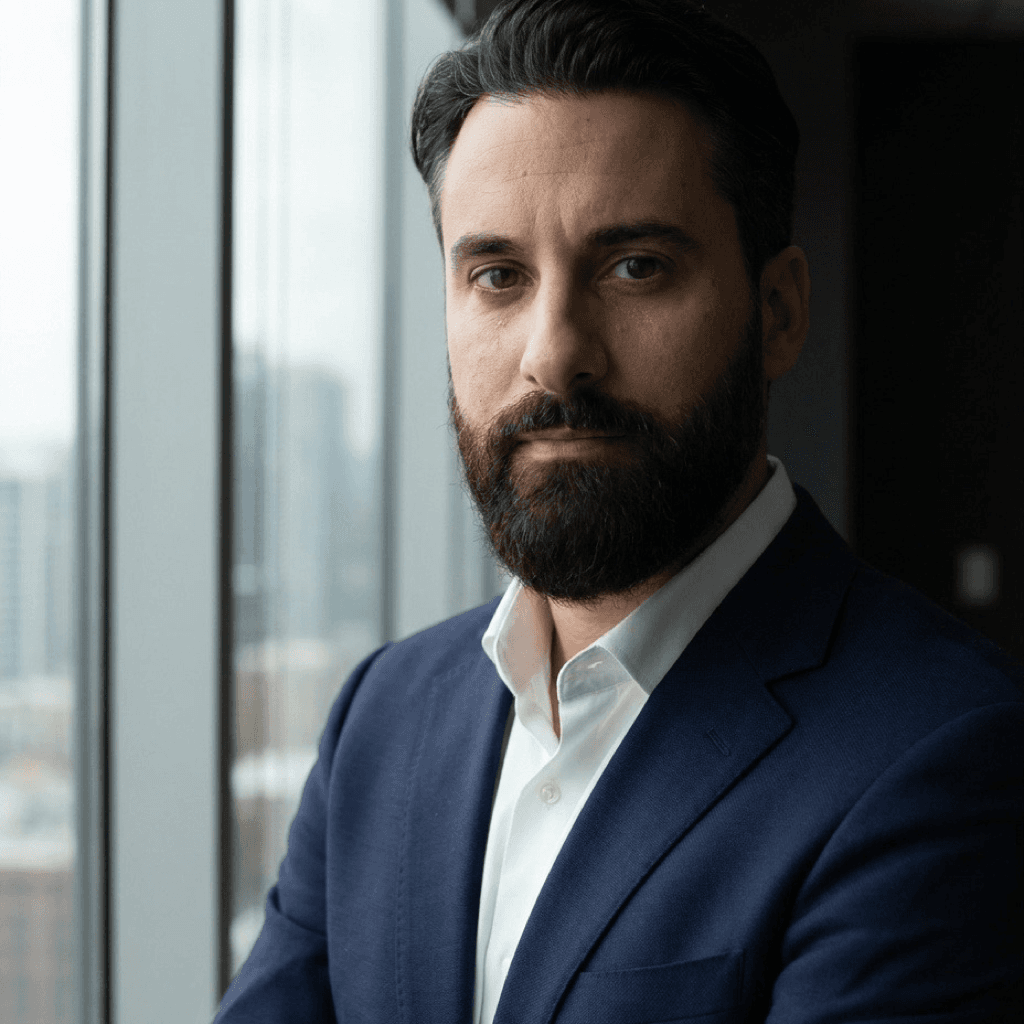
Anthony Ricciardo — Fractional CTOLinkedIn ↗
The short version
My background is unusual for this work. I spent years in the Navy before I built technology companies, and that order matters. The Navy teaches you to think about systems the way an operator does: what breaks under pressure, what actually scales, and what is an expensive distraction dressed up as progress. I have never stopped evaluating technology that way.
Twenty-two years in, most of my work sits in two places. Insurance and agency distribution, where I’m licensed in fifteen states, have run the sales floor myself, and built the AI dialer that fed it — so when I talk about lead-to-close economics it isn’t theory. And home services and specialty contractors — pool, landscape, solar, roofing — where the systems mess is usually costing more than anyone has stopped to measure.
Around that: AI-powered sales platforms, consumer marketplaces with native mobile apps, and the data infrastructure companies in real estate, solar and SaaS run on. The through line is sales organizations, where the gap between what the CRM says and what is actually true is usually the most expensive thing in the business.
The common thread is not an industry. It’s a moment: a business growing faster than its technology can support, and the work of getting those two back in sync before the gap starts costing customers.
What I am not is a vendor. A vendor is hired to deliver a scope and is finished when the scope is met, which is why a vendor will never tell you the scope was wrong. I’d rather be the person in the room who asks why before how, brings you options instead of one path, and is measured on whether the business moved — not on whether the thing shipped.
The work is closer to installing sprinklers than to firefighting. Anyone can put out the fire in front of you this week; the job is building systems that stop starting them, so that in a year the technology is running quietly and you are spending your week on the business instead. If you’re spending too much of yours on technology decisions and not enough on growth, that’s the conversation I like having.
Range
Most of what goes wrong isn’t new. It’s a familiar shape in unfamiliar clothes.
The failures that cost founder-led companies the most are rarely exotic. Recognising one early is worth more than knowing any particular stack, and that recognition comes from having learned a lot of different systems from the bottom — several of which have nothing to do with technology.
Nuclear propulsion
In the Navy I was a nuclear engineer — physics and chemistry applied to a system where nobody gets to find out what happens if you were wrong. The standard there is not that it works. It is that you can say what it does when two things fail at once, and you built for that long before it happened. Most technology roadmaps have never had that question put to them.
Chaos theory
I studied nonlinear systems, where a rounding error at the start becomes a completely different answer at the end. That is not abstract in your business — it is why two reports disagree. The cause is almost never a big error somebody would have caught. It is a small one compounding quietly through six systems, and you find it by tracing the sensitivity rather than auditing the output.
Music
I sang and played instruments before I ever produced electronic music, and production is systems work wearing headphones: thirty tracks that each sound fine alone and turn to mud together. You develop an ear for which single element is fighting the others. It is the same move as walking into a stack where every tool works and none of them talk.
Backcountry
Hiking, camping and survival a long way from help teaches you to plan for the failure you cannot phone anyone about. You carry redundancy for the things that end the trip, not for the things that merely annoy you. That is the whole derisk argument: one payment processor, one server, one person who knows how the critical system works.
Competitive swimming
I swam competitively through high school. Nothing teaches you faster that the visible result was produced months earlier, in the unglamorous part nobody watches. It is why I would rather install sprinklers than fight fires — the work that prevents next year's emergency never looks urgent this week, and it is the only work that compounds.
Real estate and markets
A lot of my own reading goes into property and the markets, and both come down to the same discipline: price what a thing actually earns rather than what the story says it earns, and size a position so that being wrong is survivable. Reading orderflow in particular is practice at the gap between the tape and the narrative — the same gap as the one between what your CRM says and what is actually true. A roadmap is a portfolio, and the most expensive habit in this work is funding the best story instead of the best return.
None of that replaces depth. Twenty-two years in the work is what makes the range useful rather than scattered, and I would be suspicious of anyone selling you the reverse. But the most valuable thing a fractional CTO does is not knowing your stack better than your engineers do. It’s sitting between rooms that don’t talk to each other — you, the sales floor, the vendors, the board — and carrying the thing one of them already knows to the one who needs it.
What it’s like to work together
Five things you can hold me to.
One person is accountable
Not a pod, not a partner who sold it and an associate who runs it. If the roadmap slips you hear it from me, before you hear it from a dashboard, with what it costs and what I recommend doing about it.
Your team gets better, not replaced
Most technical teams at this stage are not underperforming — they are unmanaged and pointed at the wrong things. I would rather develop the people you have than run a hiring cycle you didn't need. When a hire is genuinely required, I make the case with numbers.
Every recommendation carries a cost and a consequence
Including the option of doing nothing. You get options with the trade-offs shown — the fast one, the cheap one, and the one I would actually run — and then a recommendation. You should never be asked to approve something you can't explain to a partner or a board afterwards.
You will get pushed back on
When you tell me to build something, my first question is why, and I ask it because I want the outcome you're after rather than the thing you asked for. Sometimes the answer is that you were right. Sometimes it's that the thing isn't worth building. You are not paying me to agree with you — the opinion is the product, and a fractional CTO who never says no is an expensive pair of hands.
You can end it
No annual lock-in on the retainer. If the work isn't earning its keep you should be able to stop it in thirty days, and the roadmap and documentation are yours to keep either way.
Industries shipped in
- Insurance & agency distribution
- Home services & specialty contractors
- Solar & energy services
- Sales organizations
- Real estate operations
- SaaS & vertical platforms
- PE-backed rollups
Worth a conversation?
Fifteen minutes. Tell me what’s going on with your technology and I’ll give you a straight read on it — including if the answer is that you don’t need someone like me yet.